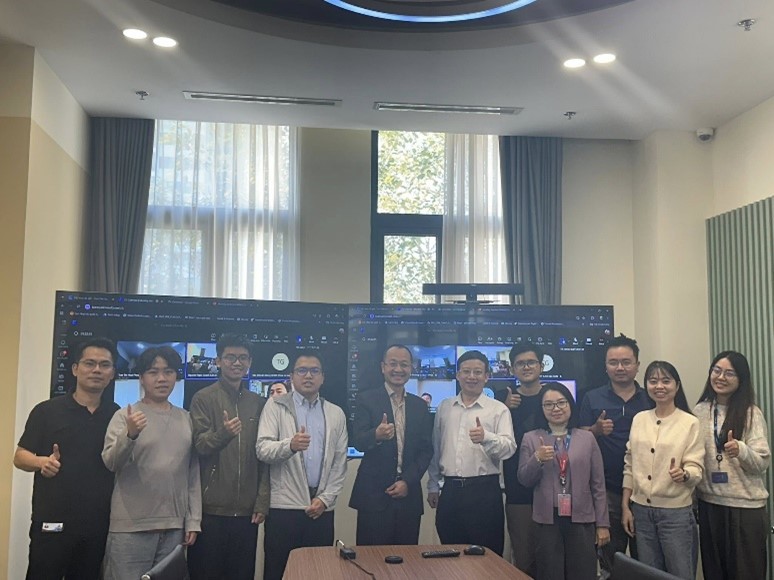
Dr. Phan Thuy Kieu, representing the research team from the Institute, emphasized that HCMC must soon complete a green growth policy framework to achieve Net Zero emissions by 2050. This is especially critical as the city currently has the highest greenhouse gas emissions in the country—an issue that could worsen with the merger of Binh Duong and Ba Ria – Vung Tau.
According to the research team, transportation and industry are the two main sources of emissions. Transportation alone produces 13 million tons of CO₂ annually. The transition to electric buses, renewable energy, and clean production technologies are prioritized in ensuring sustainable development by 2030 and beyond.
Suggesting new driving forces for green transition in the expanded HCMC, MSc. Ho Nguyen Thai Bao from the Institute highlighted that after administrative boundary restructuring, the city’s area now exceeds 6,700 km², positioning it to become a green economic hub of the Southeast region.
Key focuses include renewable energy development, green logistics, green finance, and the circular economy. New advantages—such as land availability, inter-regional infrastructure, and a marine ecosystem from Ba Ria – Vung Tau—support the development of carbon-neutral industrial parks, wind turbine manufacturing, and green inland waterway transport services. However, the city also faces environmental challenges, particularly in mangrove areas, which demand coordinated planning and a sustainable development model.
Assoc. Prof. Dr. Phan Thi Thuc Anh from VinUniversity noted that as a strategic partner, VinUni has collaborated with Nha Trang – Khanh Hoa to develop two green transition proposals at both city and provincial levels, becoming national pioneers. The project engaged over 50 domestic and international experts, delivering tangible impacts in green tourism, green transportation, green agriculture, and green lifestyles.
Notably, public transport usage in Nha Trang is only 2.6%, while 100% of vehicles rely on fossil fuels—underscoring the urgent need for green transportation. The proposal also outlined over 100 specific projects and dozens of criteria sets and modern management tools such as Digital Twin and BEMS. These contribute to turning Khanh Hoa into a model of green transition, attracting investment and improving sustainable living quality.
For the expanded HCMC, VinUni proposed focusing on green transition pillars including industry (particularly energy), transportation, agriculture, environment, and lifestyle. Specific models include plastic-free traditional markets, “no-landfill-waste” neighborhoods, and rooftop gardens combined with solar power. Other notable solutions are green lifestyle education in schools, AI chatbots for sustainable consumption advice, and Digital Twin applications in traffic management.
According to Mr. Le Van Danh, Deputy Director of the Department of Industry and Trade of Ba Ria – Vung Tau, the biggest obstacles for SMEs in green transition are financing and legal frameworks. While state budgets are limited and bureaucratic processes are complex, many off-budget funds are ready to support green investments with low or even zero interest rates. Therefore, more flexible mechanisms are needed to mobilize and use these resources.
Moreover, institutional bottlenecks—such as those seen in the Circular Economy Proposal in Con Dao—have led many localities to “feel their way forward” due to the lack of clear legal frameworks. He also highlighted overlapping management: many sectors are overseen by multiple departments, with no clear lead agency.
A representative from Vu Phong Energy Group emphasized that green transition in industry is a crucial and urgent pillar that requires stronger actions to help manufacturers increase their use of renewable energy.
Many businesses want to invest in rooftop solar power but are hindered by regulatory barriers, while the return on investment remains slow. Direct power purchase agreements (DPPA), once highly anticipated, have so far only been realized by Samsung. “What about Vietnamese enterprises?” the representative asked, while also proposing the establishment of a dedicated unit to provide technical and legal support and enhance local officials’ capacity to accompany businesses in their green transition journey.